Chattanooga event guide
Memorial Auditorium Seating Map: Sections, Rows, and Seat Numbers
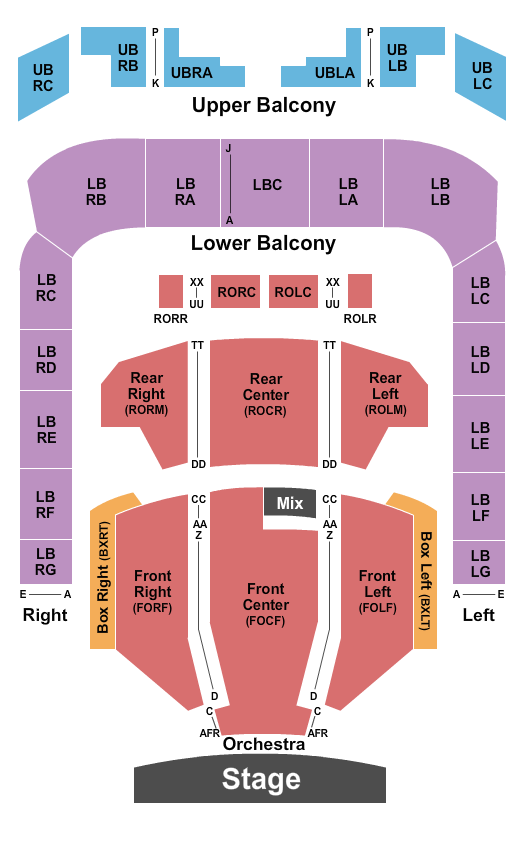
Use a map for the exact event at Soldiers and Sailors Memorial Auditorium. The example below is the configuration supplied for the Black Jacket Symphony listing.

Locate the stage and then the section printed on the listing. Make sure you’re looking at the main auditorium rather than the Walker Theatre, which has its own chart.
Explore the Soldiers & Sailors Memorial Auditorium venue guide →Find the map for the main auditorium
Start with the event page for Soldiers and Sailors Memorial Auditorium in Chattanooga. Confirm the room before you compare rows. The Walker Theatre is in the same building, but a Walker chart will show you a different room. If the seller’s venue name looks abbreviated, match the room against the production’s listing before you rely on the map.
The chart on this page comes from the Black Jacket Symphony event listing. It gives you a practical example of an end-stage layout. Use it to learn how the sections relate to the stage, then open your own event’s map to find the seats on offer. Older charts can still be useful for orientation, but you should check the current event before relying on a row or seat number.
Read the layout from the stage outward
Find the stage first. Then find the seating block that matches the full section label on your ticket. If you only look for the row letter, you can end up comparing two different levels or two blocks with different stage angles. Keep the section name visible while you zoom in on the row.
Once you have the right block, look at its relationship to the middle of the stage. A section that sits off to one side can be relatively close but give you a sharper angle. A center section farther away may make it easier to follow a full-stage performance. Think about what you want to watch before you let distance or the ticket price decide for you.
Compare the actual row positions
Within your section, look at where the row sits relative to the stage and where you enter the block. If two seats are in different sections, compare their positions on the map before assuming that matching row letters mean matching distances. A row that begins a block can also have a different approach from one in the middle.
Check whether the map shows individual rows or just an outline of the section. If it shows the section only, ask the box office where your row falls within it. This is especially useful when you’re deciding between two similarly priced tickets and one seller gives you more detail than the other. You may only need one additional fact to make the choice.
Use seat numbers to check the aisle and adjacency
Seat numbers are most useful once you know the row. If you want an aisle, find the seat dot beside the aisle on the map. The last number shown on a reseller’s listing may only be the last available seat in that offer. If the map gives you a number range rather than individual dots, ask for confirmation before paying extra for a presumed aisle seat.
For two or more people, check that the seats are together in the same row and block. Some layouts split odd and even numbers by side. Two numbers that differ by two can still be adjacent. A clear promise from the seller or an event map showing both positions gives you more confidence than trying to infer adjacency from the numbers alone.
Look for production-specific details
Start with any view notes on the listing. If it mentions a partial or limited view, think about what that could mean for the show you’re seeing. For a musical, an obstructed edge of the stage may matter when entrances and scenery change. At a concert with a single performer, the important question might be whether you can see the microphone or instrument clearly from that seat. The map can show the angle, while the box office may know more about how the production will use the stage.
Check whether the map and the seller describe the same kind of admission. If a listing is labeled reserved, look for the section and row. If the seller hasn’t shown a seat number, read its disclosure and decide whether you’re comfortable purchasing with the information provided. Ask about delivery timing if you plan to head to the auditorium soon after buying.
Check access before you choose the row
If you need a step-free path, wheelchair space, or companion seating, contact the venue about the exact performance. Ask which entrance you should use and whether the route from that entrance to your row includes steps. Also ask where your companion would sit. A seat can be close to an aisle on the chart without giving you the route you need to reach it.
If stairs are manageable in small numbers, ask how many you should expect between the section entrance and the row. That gives you a concrete way to compare two seats even when a general venue description sounds the same for both.
Save the details you’ll need on show night
Before checkout, confirm the date and time, section, row, number of seats, and total price including fees. Keep the ticket accessible on your phone and note the venue’s room name. If you’re meeting someone downtown, share the room name as well as the building name so everyone heads toward the right entrance.
When you find a section you like, save its full name with the row and seat details. A screenshot of the map can help your group agree on where to sit, but keep the actual ticket available separately for entry. If two sellers describe the same area differently, use the labels on the event map as the reference. Ask the seller to clarify any abbreviation that could point to more than one level or block. It’s easier to resolve that question before paying than after the tickets arrive.
Use the Memorial Auditorium venue guide for location and visitor information. When you’ve picked a show, open its event page to compare the current seating and ticket options. If you’re still deciding, browse Chattanooga theatre events and compare dates before comparing rows.
Before you head out
Questions, answered
Which map should I use before buying?
Open the map for the exact event you plan to attend and confirm the section and row with the ticket seller. Details ↗
Sources & References
Event details and visitor information checked 2026-11-05. Check the venue's current guidance before you travel.


